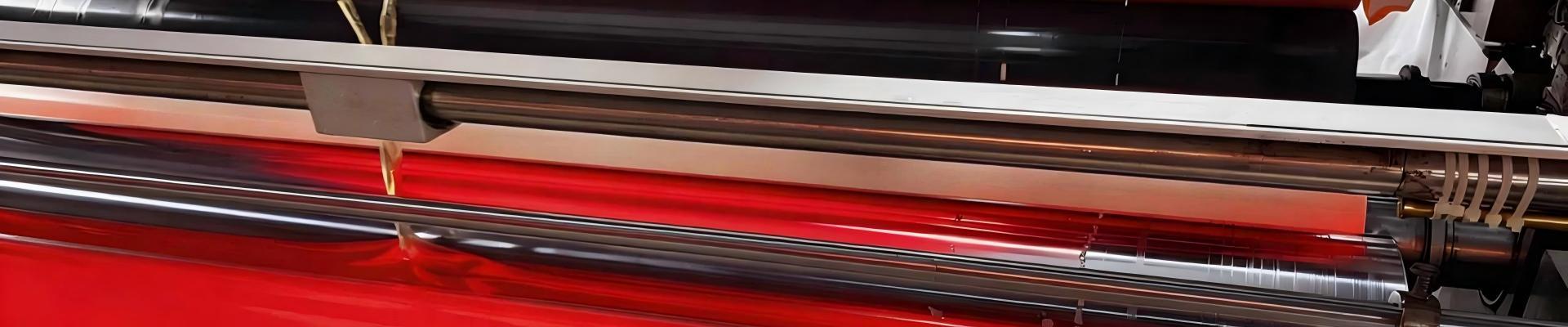
In the grand narrative of global industrial manufacturing, it is often the seemingly ordinary materials that silently support the functioning of modern civilization. When moisture barriers at construction sites withstand extreme weather, or when sterile protective medical equipment creates life-saving barriers, a material called low-density polyethylene (LDPE) film emerges as an indispensable "invisible backbone" of modern industrial systems, thanks to its exceptional physical properties and precise controllability.
I. The Beauty of Material Science: The Dance Between Flexibility and Rigidity
LDPE film is far from simple plastic packaging. From a materials science perspective, it represents a precisely engineered industrial substrate. The market dominance of LDPE stems from its unique molecular structure—abundant long-chain branches during polymerization result in lower crystallinity, granting the material inherent softness, high transparency, and excellent processing adaptability.
Unlike the rigid, high-strength approach of high-density polyethylene (HDPE), LDPE achieves a near-perfect equilibrium between flexibility and barrier performance. This "flexible strength" allows the material to effectively dissipate energy through molecular chain slippage and rearrangement when facing mechanical stress, demonstrating superior toughness in puncture resistance, tear resistance, and deformation resistance compared to conventional materials.
II. Stringent Standards: Industrial Precision at Micron-Level
The production process of high-performance 50μm blue LDPE film exemplifies rigorous industrial standardization. In manufacturing, precision equates to reliability.
The product achieves exceptional dimensional control: width set at 1300mm with a mere -0/+6mm tolerance; thickness maintained at 0.050mm with a stringent ±0.005mm variation. This micron-level precision ensures flawless compatibility with automated high-speed production lines, preventing downtime or waste caused by dimensional fluctuations.
Mechanical performance metrics are equally impressive: both machine direction (MD) and transverse direction (TD) tensile strength ≥15 N/50mm, with elongation at break ≥230%. These specifications guarantee structural integrity under significant tensile stress. Furthermore, a surface tension ≥42 dyne ensures excellent adhesion for secondary processing—whether printing, multi-layer lamination, or specialty coating. The strict enforcement of "four-zero" standards (no bubbles, no stains, no damage, no impurities) provides ultimate assurance of optical quality and structural integrity.
III. Application Spectrum: The Cross-Industrial Versatility of LDPE
The breadth of LDPE applications establishes its strategic position across industrial sectors:
-
Industrial & Chemical Protection: In precision manufacturing, LDPE's chemical inertness provides "vacuum-grade" protection against dust and moisture for electronic components and mechanical parts. For chemical storage, its stable molecular structure effectively blocks corrosive substance penetration, ensuring logistics safety.
-
Agricultural Microclimate Regulation: As greenhouse covers and mulch films, LDPE not only optimizes microclimates to boost crop yields but also resists UV radiation through specialized additive technologies, extending service life and serving as a critical defense against pests and extreme weather.
-
Healthcare Barriers: With excellent bio-inertness and impermeability, LDPE is widely used in disposable surgical gowns, medical drapes, and sterile packaging for precision instruments—forming the first line of defense against cross-contamination in medical environments.
-
Construction Waterproofing: In building exteriors, roofing, and insulation systems, LDPE serves as a core moisture barrier, effectively preventing water infiltration to extend structural lifespan and reduce maintenance costs—an essential component of green and energy-efficient construction.
IV. Technological Evolution: From Basic Material to Custom Solutions
Modern LDPE production has transcended simple extrusion, becoming a symphony of precision chemistry and physical engineering:
-
Material Blending: Scientific compounding with linear low-density polyethylene (LLDPE) or HDPE enables precise tuning of impact strength and rigidity for customized physical properties.
-
Functional Additives: Incorporating elastomers, reinforcements, and UV stabilizers significantly enhances durability for outdoor or high-stress applications.
-
Surface Engineering: Acrylic, polyurethane, or silicone coatings dramatically improve barrier properties and wettability for more demanding industrial tasks.
-
Molecular Orientation: Stretching processes align polymer chains, while cross-linking technologies boost thermal stability and chemical resistance for extreme operating conditions.
-
Process Control: Real-time monitoring of extrusion temperature, pressure, and draw speed ensures consistent molecular weight distribution and thickness uniformity—critical steps toward Industry 4.0 manufacturing.
V. Conclusion: Toward a New Era of High-Performance Films
The value of LDPE lies in its unparalleled adaptability and functional extensibility. More than an industrial protective base, it embodies the continuous evolution of materials science. From basic dust covers to advanced medical barriers, through scientific formulation and rigorous process control, LDPE persistently redefines the boundaries of protective technologies.
For manufacturers, mastering these technical parameters and modification techniques has become more than production consideration—it's a core strategy for enhancing product competitiveness and application reliability. In the era of high-performance films, those who can most precisely harness molecular characteristics will command the industrial landscape. As technology continues to advance, this seemingly simple "film" will undoubtedly continue writing its industrial legacy across ever-expanding frontiers.


 メッセージは20〜3,000文字にする必要があります。